The Almost-Purchases That Know You Better Than You Do
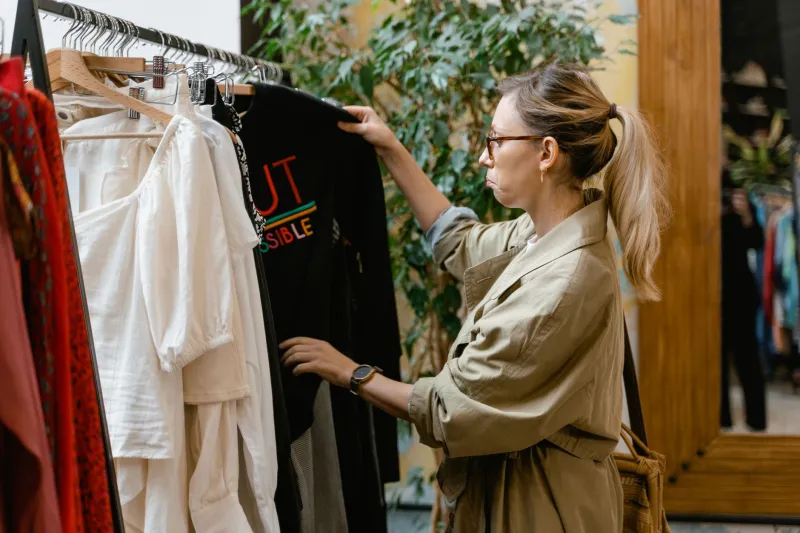
The Item You Keep Going Back To
You know the one. Maybe it's a structured blazer in a color you'd never normally wear. A pair of heels that feel like a different woman entirely. A dress that's just slightly too much — too polished, too bold, too something — for who you think you are right now.
You've picked it up more than once. Maybe you've even tried it on. And then you put it back, told yourself it wasn't practical, it wasn't you, it wasn't the right time.
But you keep going back.
There's something worth sitting with in that pull. Because the things we almost buy — and consistently talk ourselves out of — aren't random. They're aspirational breadcrumbs. They're the closet equivalent of the life you're quietly rehearsing in your head.
Why the Return Tells You More Than the Purchase
Buying something is easy. You can convince yourself of almost anything in a dressing room with good lighting. But returning something — or talking yourself out of it at the register — requires a different kind of honesty.
When you return a piece, you're usually not saying this is ugly or this doesn't fit. More often, you're saying: I'm not ready to be the person who wears this yet.
And that's a completely different conversation.
There's a specific kind of almost-purchase that shows up when you're in transition — when you're not quite the old version of yourself anymore, but you haven't fully stepped into the new one either. You're drawn to pieces that belong to the next chapter, but something keeps stopping you from committing to them. The return isn't rejection. It's a delay.
The question is: a delay because it's genuinely wrong for you, or a delay because you're afraid of what it means to own it?
Aspirational Trap vs. Genuine Evolution
Not every almost-purchase is a signal to go back and buy it. Some of them are traps — beautiful, expensive traps designed to sell you a fantasy version of yourself that doesn't actually align with who you are or who you're becoming.
The aspirational trap tends to feel like performance. The blazer you almost bought because you thought it would make you look more serious in meetings, not because you actually wanted to wear it. The athleisure set that signals a morning routine you don't have and don't particularly want. The aesthetic that belongs to someone else's life, not an evolved version of your own.
Genuine evolution feels different. It's the piece that makes you feel more yourself, not like a costume. It's slightly ahead of where you are, but in a direction that actually makes sense — a natural extension rather than a full character change.
The distinction matters because one of them is worth going back for, and the other one is worth letting go of completely.
What the Hesitation Is Actually Protecting You From
Sometimes a no is just good judgment. You don't have the budget. The quality isn't there. It doesn't work with anything you own. These are practical, valid reasons to walk away.
But sometimes the hesitation is doing something more protective — it's keeping you from making a purchase that would require you to become someone you're not ready to be yet. And that's not a failure. That's your instincts doing their job.
Buying the piece before you're ready can actually create a kind of identity pressure that backfires. You own it, it hangs in your closet unworn, and every time you see it, it becomes a reminder of the gap between where you are and where you thought you'd be. That's not motivation. That's just low-grade shame living in your wardrobe.
The better move — the one that serves you — is to notice what you keep reaching for and ask yourself honestly: what would I have to believe about myself to actually wear this? And then figure out if you're working toward that belief, or if it's genuinely not the direction you're headed.
The Closet Edit You Haven't Thought to Do
Most closet audits focus on what you have. But there's a different kind of inventory worth taking — the one that tracks what you almost had.
Think back over the last year or two. What did you try on and love but talk yourself out of? What items did you return that you still think about? What aesthetic keeps showing up in your saved posts or Pinterest boards that you've never actually pulled the trigger on?
That collection of almosts is a map. It's showing you something about the direction your taste — and your identity — is actually moving, even when your purchases haven't caught up.
You don't have to go buy all of it. In fact, please don't. But you do owe it to yourself to look at the pattern and ask: is there a version of myself I keep almost becoming, and what's stopping me?
When the No Finally Becomes a Yes
There's a specific feeling when you buy something you've been circling for a while and it finally just fits — not just physically, but existentially. You put it on and instead of wondering if you can pull it off, you just feel like yourself. Maybe a slightly more evolved version of yourself, but yourself.
That's what the almost-purchases were protecting you for. Not from, but for — keeping a space open until you were actually ready to step into it.
Your closet isn't just a collection of things you own. It's a running record of who you've been, who you're becoming, and — in the returns and the hesitations and the items you keep going back to — who you're not quite ready to be yet.
Pay attention to that last category. It knows something.