Someone Else's Aesthetic Is Not a Life Plan

Someone Else's Aesthetic Is Not a Life Plan
Let me paint you a picture. It's 6 a.m. You're watching a YouTube video of a woman you've never met making matcha in a sunlit kitchen, wearing linen, with a planner open beside her and a book you should probably read sitting on the counter. The voiceover is calm. The color palette is cohesive. Everything feels intentional and soft and like this — whatever this is — is the version of life you should be living.
You close the app. You open it again. You add the planner to your cart.
Sound familiar? Yeah. Me too.
Here's the thing, though: there is nothing wrong with being inspired by how other people live. Inspiration is genuinely useful. But somewhere between this is interesting and I need to rebuild my entire morning routine around this stranger's content, something goes sideways. And I think it's worth talking about.
The Aesthetic Pipeline Is Real
Social media has become extraordinarily good at packaging identity. We've gone from following people to following aesthetics — fully realized visual worlds complete with their own wardrobes, wellness philosophies, relationship dynamics, and life goals. 'That girl.' Coastal grandmother. Dark academia. Soft life. Clean girl. Old money.
Each of these is, on some level, a story. A curated set of values and visuals and vibes that suggest: if you look like this, your life will feel like that.
And they work, psychologically, because human beings are deeply wired for narrative. We don't just want stuff — we want the story that comes with the stuff. We don't just want a linen blazer; we want to be the kind of person who wears a linen blazer effortlessly and has a life that makes sense in linen.
The problem isn't that these aesthetics exist. It's that they're incredibly easy to absorb as your own without ever stopping to ask whether they actually belong to you.
Aspiration vs. Appropriation (of Someone Else's Vision)
There's a meaningful difference between being inspired by something and outsourcing your vision of a good life to it.
Aspiration says: I love that energy. What version of that resonates with who I actually am?
Aesthetic appropriation says: I want that exact thing, in that exact way, because seeing it made me feel something.
The second one isn't always wrong. But it gets complicated fast when you're making real decisions — how to decorate your home, what career to pursue, what kind of relationship to want, what your mornings should look like — based on a visual identity that was built by and for someone else's life.
You end up in a house that doesn't feel like you, chasing a morning routine that exhausts you, wearing clothes that look great on a grid and feel wrong on your body, wondering why you still don't feel the way you thought you would.
The vibe was never the problem. The problem was mistaking someone else's vibe for a map to your own fulfillment.
Why It's So Hard to Notice When It's Happening
Honestly? Because the content is good. These creators are skilled. The lighting is beautiful, the storytelling is compelling, and the products are often genuinely nice. There's nothing obviously manipulative about it — it's just... appealing.
But appealing and right for you are two completely different things, and the algorithm isn't designed to help you tell them apart. It's designed to keep you watching. The more you engage with a particular aesthetic, the more of it you see, until your entire feed is a very convincing argument that one specific version of life is the version worth wanting.
Add to that the very human tendency to conflate feeling inspired with feeling certain, and you've got a recipe for building a life around someone else's blueprint without ever quite realizing that's what you're doing.
The Challenge: Define It In Your Own Words
Here's something I've started doing, and I'd genuinely challenge you to try it: describe your ideal life without referencing any visual references, creators, or aesthetics.
No 'I want a life that feels like a Caro Daur feed' or 'I'm going for that Ina Garten in the Hamptons vibe.' Just words. Your words. What do you want your days to feel like? What do you want to spend your energy on? What matters to you when nobody's watching — when you're not thinking about how it would look in a photo or whether it fits a particular aesthetic category?
 Photo: Ina Garten, via www.danspapers.com
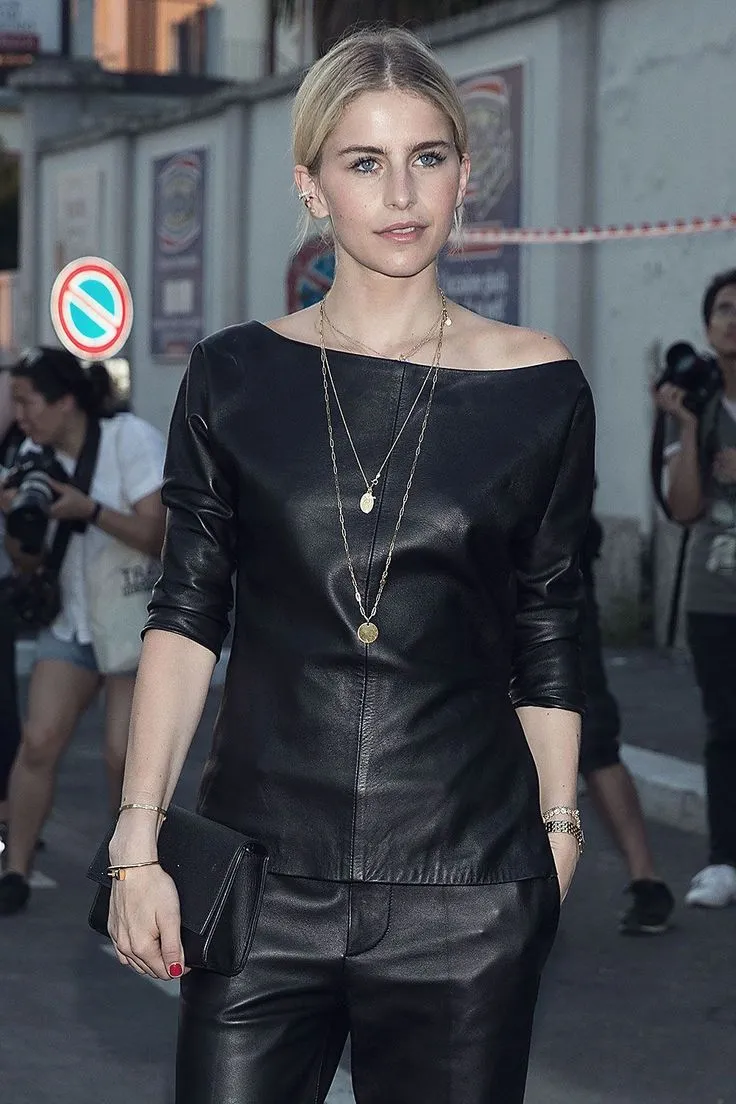 Photo: Caro Daur, via i.pinimg.com
It's harder than it sounds. And that difficulty is actually really telling.
If you can't describe what you want without borrowing someone else's imagery, it might be a sign that you've been consuming other people's visions of the good life so consistently that you haven't had much space to develop your own.
Building a Life That's Actually Yours
This isn't a call to go off the grid or quit Instagram or stop watching content that makes you feel something. Consume what you enjoy. Be inspired by beautiful things. That's a completely reasonable way to move through the world.
But let the inspiration be a starting point, not a destination.
Use it as a question: What is it about this that appeals to me, and how does that map to something real in my own life? Maybe the 'quiet luxury' aesthetic resonates because you're craving simplicity, not because you need a capsule wardrobe of neutral cashmere. Maybe you love 'that girl' content because you genuinely want more structure in your mornings — not because you need to be up at 5 a.m. making elaborate smoothie bowls.
The aesthetic is a clue. But you have to do the work of translating it into something that's actually yours.
Because here's the truth nobody in the algorithm is going to tell you: the most compelling life you can build is one that's authored by you — in your own language, shaped by your own values, and designed around what you actually want when you get quiet enough to hear it.
That version of your life might not photograph as cleanly. It might not fit a category. But it'll fit you. And that's the whole point.